Meta Description
Compare personal loans and credit cards to understand interest rates, repayment terms, advantages, disadvantages, and discover which borrowing option is best for your financial needs.
Introduction
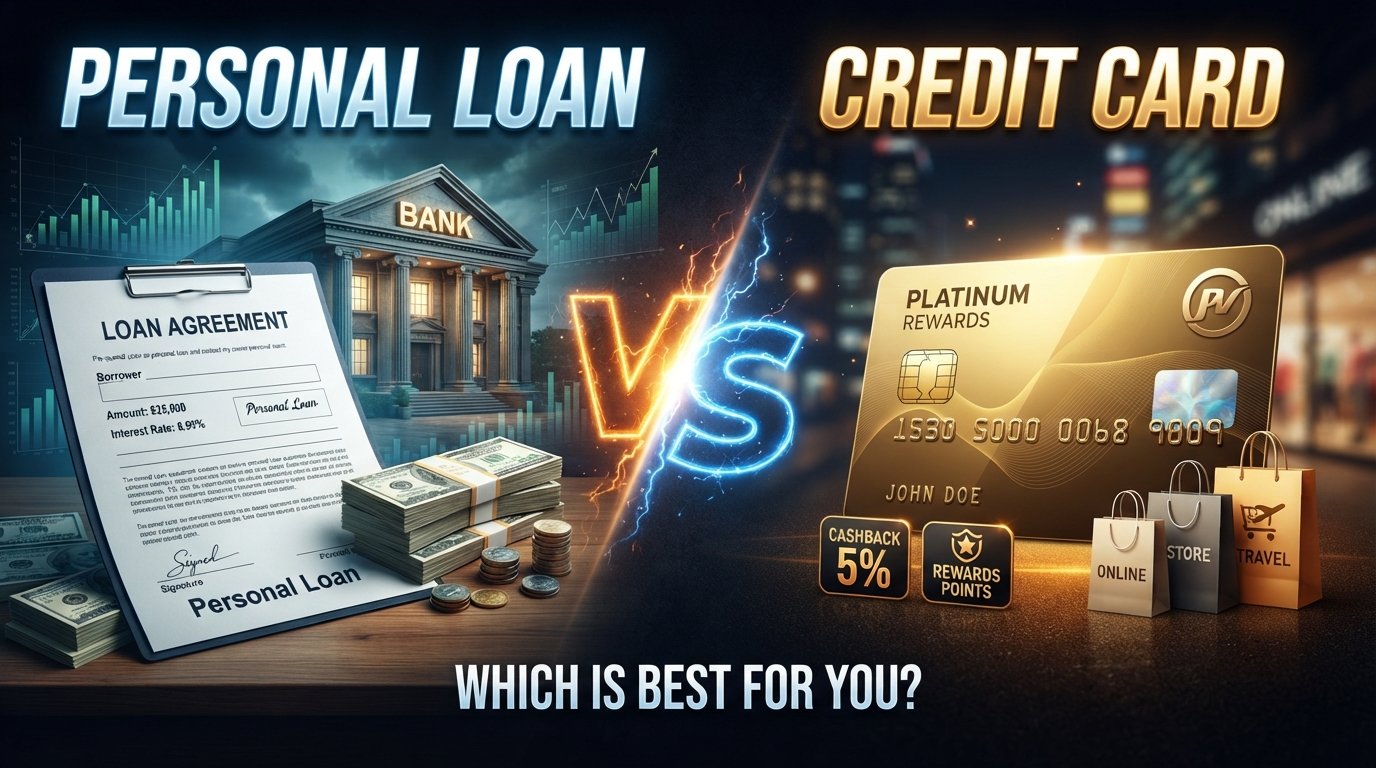
When you need extra money for an emergency, home improvement, medical bills, education, or a large purchase, two of the most common borrowing options are personal loans and credit cards. While both provide access to funds, they work very differently and are designed for different financial situations.
Choosing the wrong option could cost you hundreds or even thousands of dollars in interest and fees. This guide compares personal loans and credit cards in detail so you can make a smart financial decision in 2026.
What Is a Personal Loan?
A personal loan is a lump sum of money borrowed from a bank, credit union, or online lender. You repay the loan through fixed monthly installments over an agreed period, usually between one and seven years.
Common Uses
- Home improvements
- Medical expenses
- Wedding costs
- Debt consolidation
- Education expenses
- Emergency bills
Advantages
- Fixed monthly payments
- Predictable repayment schedule
- Lower interest rates than many credit cards
- Suitable for large expenses
Disadvantages
- Approval depends on your credit profile
- May include processing fees
- Less flexibility once the loan is issued
What Is a Credit Card?
A credit card provides a revolving line of credit that allows you to borrow money up to your credit limit. You can repay the balance in full or make minimum monthly payments, although carrying a balance usually results in interest charges.
Common Uses
- Everyday shopping
- Online purchases
- Travel bookings
- Emergency expenses
- Subscription payments
Advantages
- Convenient and widely accepted
- Cashback and reward programs
- Interest-free period if paid in full
- Great for smaller purchases
Disadvantages
- Higher interest rates
- Easy to overspend
- Late payment fees
- Debt can accumulate quickly
Personal Loan vs Credit Card
| Feature | Personal Loan | Credit Card |
|---|---|---|
| Loan Type | Fixed amount | Revolving credit |
| Interest Rate | Usually lower | Usually higher |
| Repayment | Fixed monthly installments | Flexible monthly payments |
| Best For | Large expenses | Daily spending and emergencies |
| Rewards | Usually none | Cashback and rewards available |
| Credit Limit | Fixed | Renewable after repayment |
Which Option Saves More Money?
Choose a Personal Loan If:
- You need a large amount of money.
- You want predictable monthly payments.
- You plan to repay over several years.
- You qualify for a low interest rate.
Choose a Credit Card If:
- You can pay the balance in full every month.
- You want cashback or travel rewards.
- Your purchase is relatively small.
- You need flexible access to funds.
Interest Rate Comparison
One of the biggest differences between these borrowing options is the interest rate.
Personal Loans
- Often offer lower interest rates.
- Fixed repayment schedule.
- Easier to estimate the total borrowing cost.
Credit Cards
- Generally have higher interest rates.
- Interest applies if the balance is not paid in full.
- Long-term debt can become expensive.
For long repayment periods, personal loans are usually the more affordable option.
How Your Credit Score Affects Approval
Both personal loans and credit cards rely on your credit score.
A higher credit score may help you receive:
- Better interest rates
- Higher credit limits
- Faster approvals
- More borrowing options
Improving your credit score before applying can save you money over time.
Common Mistakes to Avoid
Avoid these borrowing mistakes:
- Borrowing more than you need
- Missing payment deadlines
- Paying only the minimum credit card payment
- Applying for multiple loans at once
- Ignoring interest rates and fees
- Using borrowed money for unnecessary purchases
Responsible borrowing protects your financial future.
Frequently Asked Questions
Is a personal loan cheaper than a credit card?
In many cases, yes. Personal loans often have lower interest rates and fixed repayment terms, making them more cost-effective for large expenses.
Can I use a credit card instead of a loan?
Yes, especially for smaller purchases that you can repay quickly. However, carrying a balance for a long time can become expensive.
Which is better for emergencies?
For small, short-term emergencies, a credit card may be convenient. For larger expenses that require structured repayment, a personal loan is often a better choice.
Which option helps build credit?
Both personal loans and credit cards can help build your credit history when payments are made on time and accounts are managed responsibly.
Final Verdict
Personal loans and credit cards each have their place in a healthy financial plan. A personal loan is generally the better choice for large, planned expenses because of its lower interest rates and fixed repayments. A credit card is ideal for everyday purchases, emergencies, and earning rewards—provided you pay the balance in full each month.
Before borrowing, compare interest rates, fees, repayment terms, and your financial goals. Choosing the right option today can save you money and strengthen your financial future.