Introduction
Mortgage loan rates in the USA in 2026 continue to play a crucial role in the housing market, directly affecting how much borrowers pay for their homes. Whether you are buying your first house, refinancing an existing mortgage, or investing in real estate, understanding current mortgage rates is essential.
In today’s market, rates are influenced by economic conditions, inflation, Federal Reserve policies, and global financial trends. Keeping track of these rates can help you make smarter financial decisions and save thousands of dollars over the life of your loan.
Related : Apply for Personal Loan Online USA in 2026
Current Mortgage Rates in the USA (2026)
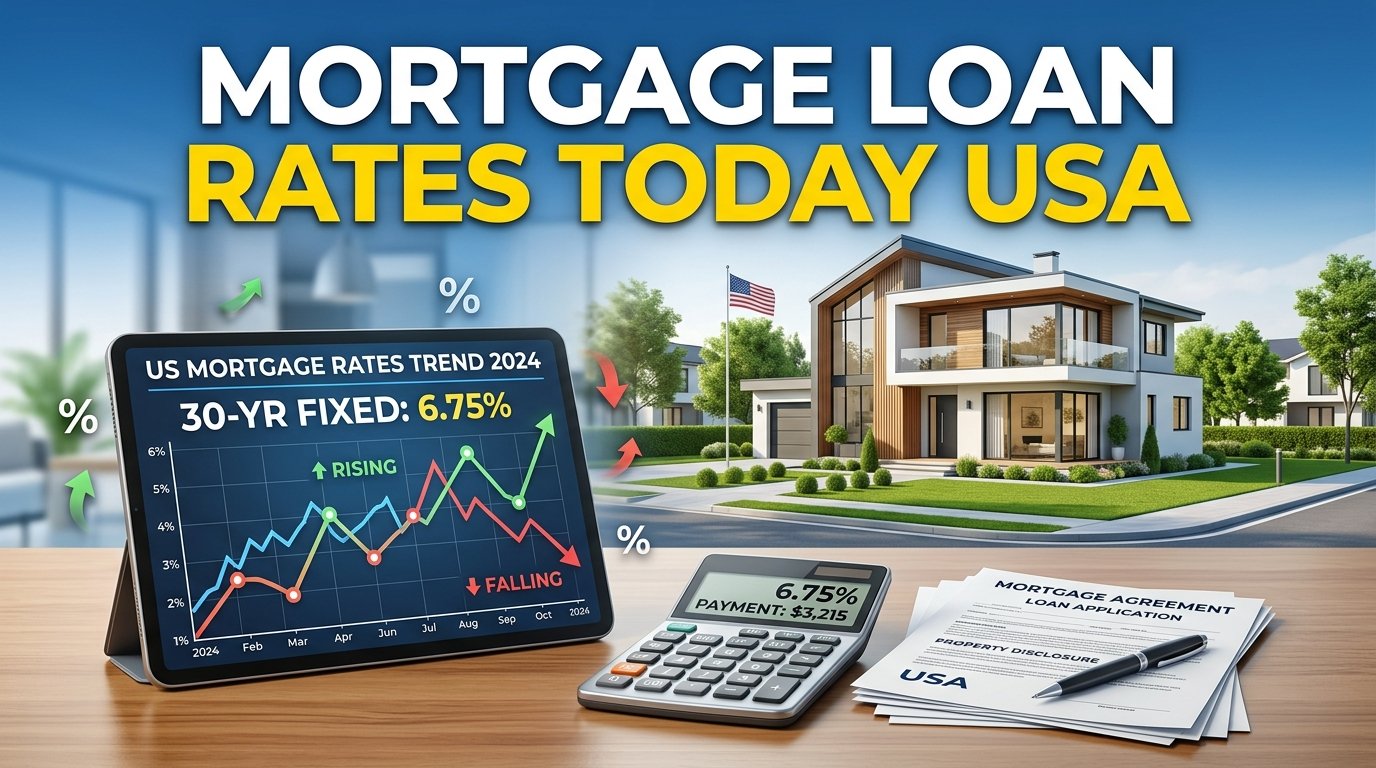
As of April 2026, mortgage rates in the United States remain moderately high compared to previous years but are slightly lower than the peaks seen earlier. The average rate for a 30-year fixed mortgage is around 6.3% to 6.4%, while a 15-year fixed mortgage is approximately 5.7% to 5.8%.
Adjustable-rate mortgages (ARMs) are generally lower, starting around 5.6% to 5.9%, depending on the lender and borrower profile.
These rates can vary based on credit score, loan amount, down payment, and lender terms.
Types of Mortgage Loans and Their Rates
30-Year Fixed Mortgage
This is the most popular mortgage option in the USA. It offers stable monthly payments over a long period. The interest rate is slightly higher, but it provides predictability and lower monthly payments.
15-Year Fixed Mortgage
This option has lower interest rates compared to 30-year loans. However, monthly payments are higher because the loan is repaid faster. It is ideal for borrowers who want to save on total interest.
Adjustable-Rate Mortgage (ARM)
ARMs offer lower initial interest rates, but the rate can change over time based on market conditions. These loans are suitable for short-term homeowners or those expecting future income growth.
Jumbo Loans
Jumbo loans are used for high-value properties and typically have slightly higher interest rates due to increased risk for lenders.
Factors That Affect Mortgage Rates
Mortgage rates are not fixed and can change daily based on several factors. One of the biggest influences is the Federal Reserve’s interest rate policy. When the Fed increases rates, mortgage rates usually rise as well.
Inflation is another major factor. Higher inflation often leads to higher mortgage rates. Economic growth, employment data, and global events can also impact interest rates.
On an individual level, your credit score, income stability, debt-to-income ratio, and down payment size significantly affect the rate you receive.
Why Mortgage Rates Change Frequently
Mortgage rates fluctuate regularly due to changes in the financial markets. Bond yields, especially U.S. Treasury yields, have a strong influence on mortgage rates. When investors move money into safer assets, rates may drop. When the economy is strong, rates tend to rise.
Global events such as geopolitical tensions and economic uncertainty can also cause sudden changes in mortgage rates.
Impact of Mortgage Rates on Monthly Payments
Even a small change in mortgage rates can have a significant impact on your monthly payment and total loan cost. For example, a difference of just 1% in interest rate can increase or decrease your monthly payment by hundreds of dollars.
Lower rates mean lower monthly payments and less total interest paid over time, making it more affordable to own a home.
Tips to Get the Best Mortgage Rate
To secure the best mortgage rate in 2026, it is important to maintain a strong credit score. Paying bills on time, reducing debt, and avoiding unnecessary credit inquiries can improve your score.
Making a larger down payment can also help lower your interest rate. Comparing multiple lenders is another effective strategy, as different lenders offer different rates and terms.
Locking your rate at the right time can protect you from future rate increases.
Should You Buy a Home Now or Wait?
Deciding whether to buy a home now or wait depends on your financial situation and market conditions. While rates in 2026 are higher than historical lows, they are still manageable for many buyers.
If you find a good property and can afford the payments, buying now may be a good option. Waiting for lower rates is uncertain, as future market conditions are difficult to predict.
Future Outlook for Mortgage Rates
Experts predict that mortgage rates may gradually decline later in 2026 if inflation stabilizes and economic conditions improve. Some forecasts suggest rates could move closer to the 5.5% to 6% range by the end of the year.
However, the market remains unpredictable, and borrowers should stay informed about rate trends before making decisions.
Conclusion
Mortgage loan rates in the USA in 2026 remain an important factor for anyone planning to buy or refinance a home. With average rates around 6% to 6.5%, borrowers must carefully evaluate their financial situation and loan options.
Understanding how mortgage rates work, what affects them, and how to secure the best rate can help you make a smart and confident decision. By comparing lenders, improving your credit profile, and staying updated on market trends, you can find the best mortgage deal and achieve your homeownership goals.